

Many Many Women (1975-78)
Music by Petr Kotik, on the text by Gertrude Stein
In conjunction with the new CD release of Many Many Women on the Sub Rosa label.
Gertrude Stein came to Woods Hole in 1897 to study embryology at the MBL; at the time she was pursuing a medical degree at Johns Hopkins. As part of this evening’s event, MBL Director Nipam Patel will give a short talk on Stein @ MBL and the impact of the world-renowned MBL Embryology Course that has been taught there every summer since 1893.
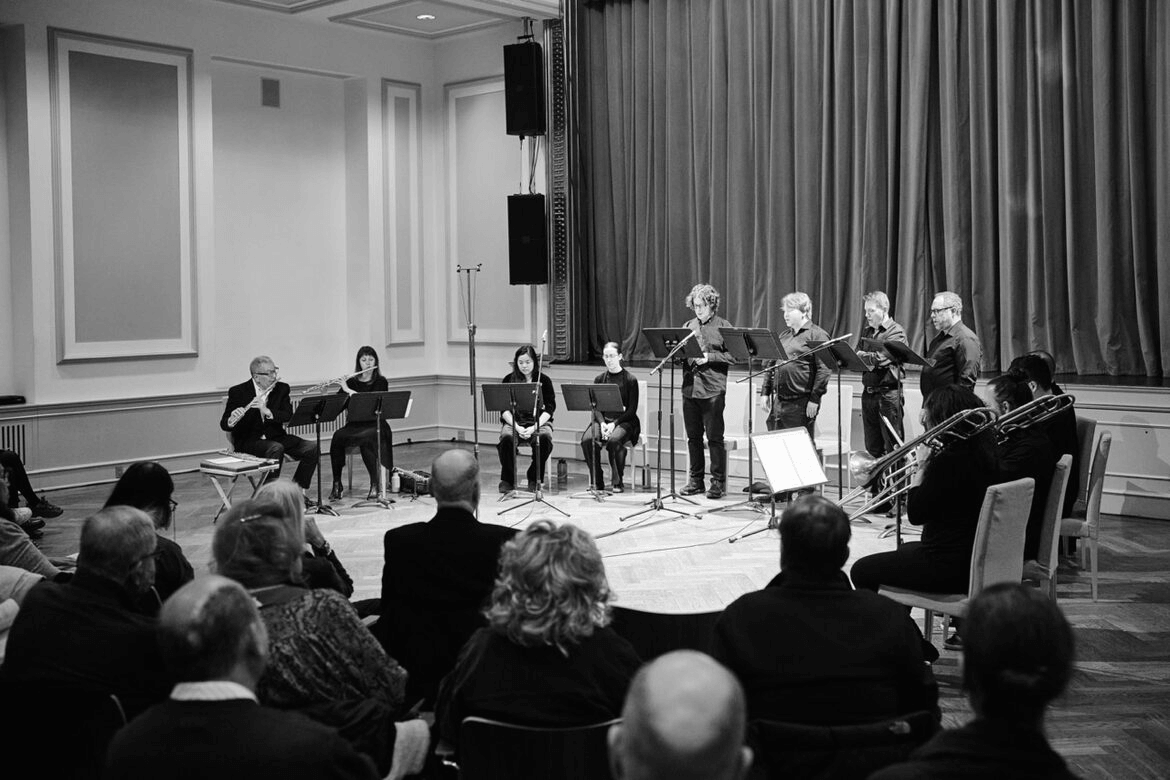
S.E.M. Ensemble performing Kotik's Many Many Women at Bohemian National Hall, April 22, 2026. Photo: Michael Yu
Many Many Women uses an entire text of the same name by Gertrude Stein, a novella published in Paris in 1910 as part of the book G.M.P. – Gertrude, Matisse, Picasso. The book was published again in 1972 by Dick Higgins in his Something Else Press.
The duration of the complete Many Many Women is 6 hours, although the composition allows a performance of selected parts, resulting in a shorter duration. This performance will last approximately 60 minutes. Writing about duration, Gertrude Stein herself states: “A masterpiece does not really have a beginning or ending. It just starts and ends.” Since the late 1970s, the S.E.M. Ensemble has performed the complete, 6-hour performance of Many Many Women numerous times, advising the audience to take a break, to leave and possibly return later. Throughout the years, there has been a noticeable increase in the number of listeners staying from the start to end.
Selected comments about Many Many Women:
At the Whitney Museum on May 15 [1979] Petr Kotik was no longer one who was needing to be waiting. He was one who was only needing to be sitting down and making wonderful music out of this feeling he was still feeling [performing Many Many Women]. The six fine singers were singing, the six fine instrumentalists were playing, the listeners were coming and going, and everyone was seeming to be caring. … and finally knowing all about it, and finally knowing just how to make wonderful music out of this thing.
– Tom Johnson (1979)
Many Many Women is in the Cageian tradition of music that takes shape in composition and performance to some extent free from the obsessive control of composer’s personal taste. It’s unusual, though, it has the linear, contrapuntal texture...
– Gregory Sandow (1980)
From its magisterial opening of "Any one is one having been that one," Kotik's Stein is continually austere and yet engaging… Many Many Women is, like Stein's text of the same name, a masterpiece that I've appreciated many times since.
– Richard Kostelanetz (1989)
Many Many Women – a classic of 1970s underground music… a musical monument, vast in scale, rich in polyphony, resonant in cultural associations… Kotik’s music is so vastly original that very few people "get it."
– Kyle Gann (2001)
Many Many Women is an invitation to step outside of time. Listening [to and an excerpt] can be a mind-altering experience, although staying for the whole [six hours] duration is easier – and more rewarding than one might think.
– Kurt Gottschalk (2022)
Many Many Women is a singular, personal statement, unlike anything else in what we call “concert music.”… Kotik’s work breaks entirely from the prevailing trends in new music… it was already revolutionary when it was created between 1975 and 1978, sounding unlike anything else in its time (or today).
– Bernhard Lang (2026)
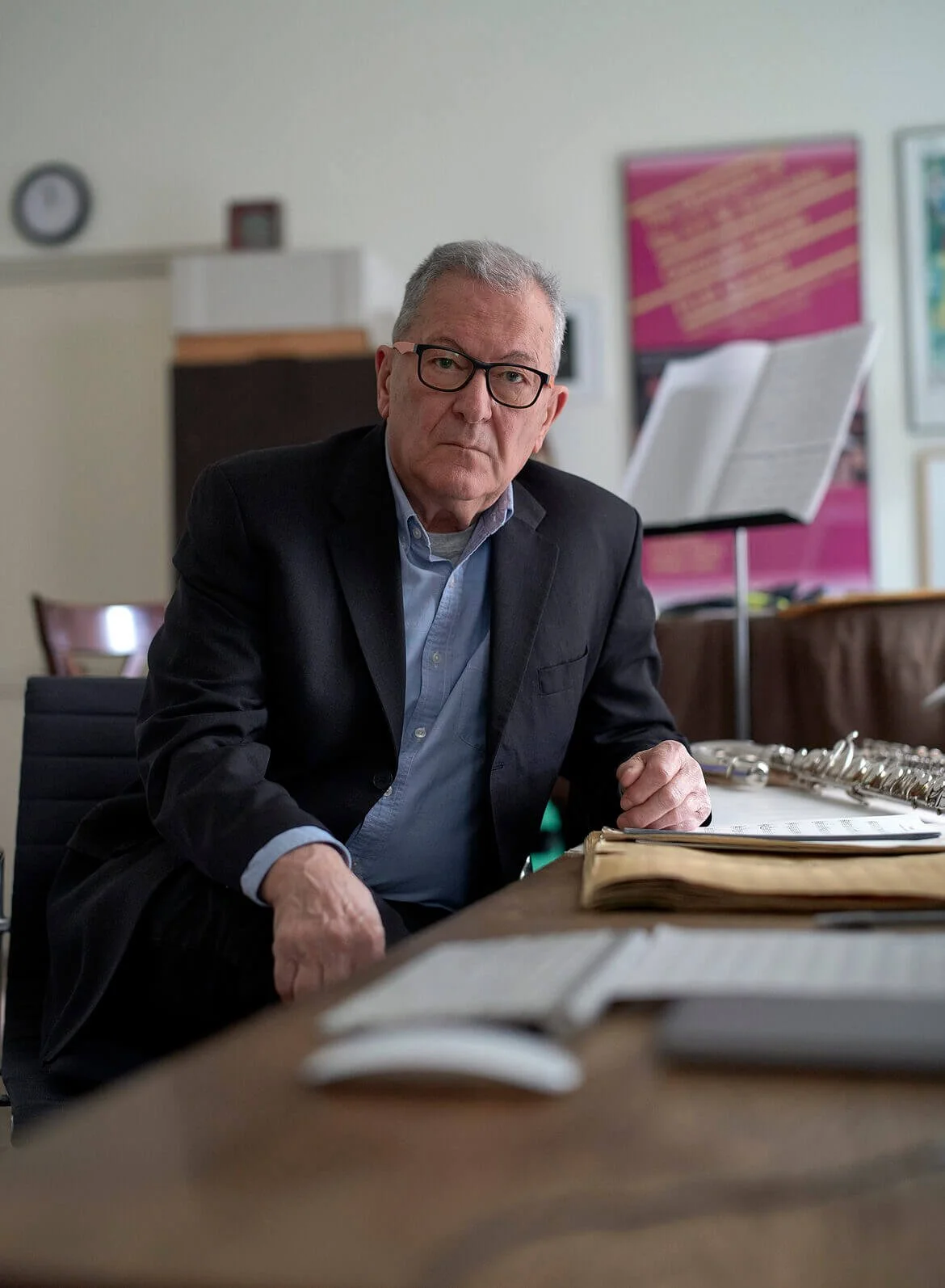
S.E.M. Ensemble: Music of Our Time
Founded by Petr Kotik with Julius Eastman and Jan Williams, the S.E.M. Ensemble is the oldest new music ensemble in the United States today.
On April 15, 1970, a group of musicians under the name S.E.M. Ensemble performed its first concert, music by Cornelius Cardew, John Cage, Petr Kotik, and Rudolf Kamorous. The reviewer of the Buffalo Evening News described it as an "Audience in Retreat": "an audience of 17, including wives and other relatives, remained out of an original 100 attendees, at the conclusion of Wednesday evening's performance of the newly-formed S.E.M. Ensemble."
Since then, the S.E.M. Ensemble have been performing music of our time: new compositions by both established and emerging composers as well as masterpieces from the recent past. In 1992, SEM expanded into a large, 86-piece orchestra, The Orchestra of the S.E.M. Ensemble, with a concert at Carnegie Hall. There, The SEM Orchestra premiered Atlas Eclipticalis by John Cage in its first complete version, with David Tudor as the pianist in Winter Music. The event attracted audiences and critics from across the United States, Europe, and Japan. Alex Ross wrote about the performance in the New York Times: "highly disciplined and monumental... sonorities shifted, intangible events solidified; collective images began to appear amid shapeless sound... an epiphany rises in the back of the mind."
From small chamber music formations to large orchestral events, SEM has made its mark on contemporary music, not paying much attention to an approval from critics or audiences. From a group of three to a large orchestra - from Morton Feldman's For Philip Guston, to large-scale compositions by Alvin Lucier, Roscoe Mitchell, Petr Kotik, and others. SEM concerts featured such soloists as Julius Eastman, John Cage, Amina Claudine Myers, David Tudor, Pauline Oliveros, Christian Marclay, Maryanne Amacher, Roscoe Mitchell, to name a few.
After relocating to New York City from Buffalo, NY in 1983, S.E.M. Ensemble, started to present yearly concerts at the Paula Cooper Gallery and in its own space, the Willow Place Auditorium in Brooklyn Heights. It also performs concerts at high-profile New York venues such as Carnegie Hall, Alice Tully Hall, Bohemian National Hall, and DiMenna Center for Classical Music, among others.
Composers Julius Eastman, Garret List and Ben Neill were past members of the S.E.M. Ensemble. Among a score of other composers, most of whom created new compositions for the Ensemble while working directly with SEM, are John Cage, Pauline Oliveros, Morton Feldman, Christian Wolff, Roscoe Mitchell, Phill Niblock, Earle Brown, Alvin Lucier, David Behrman, as well as many young, emerging composers.
Suggested donation
$25 per person
Please let us know
that you're coming!